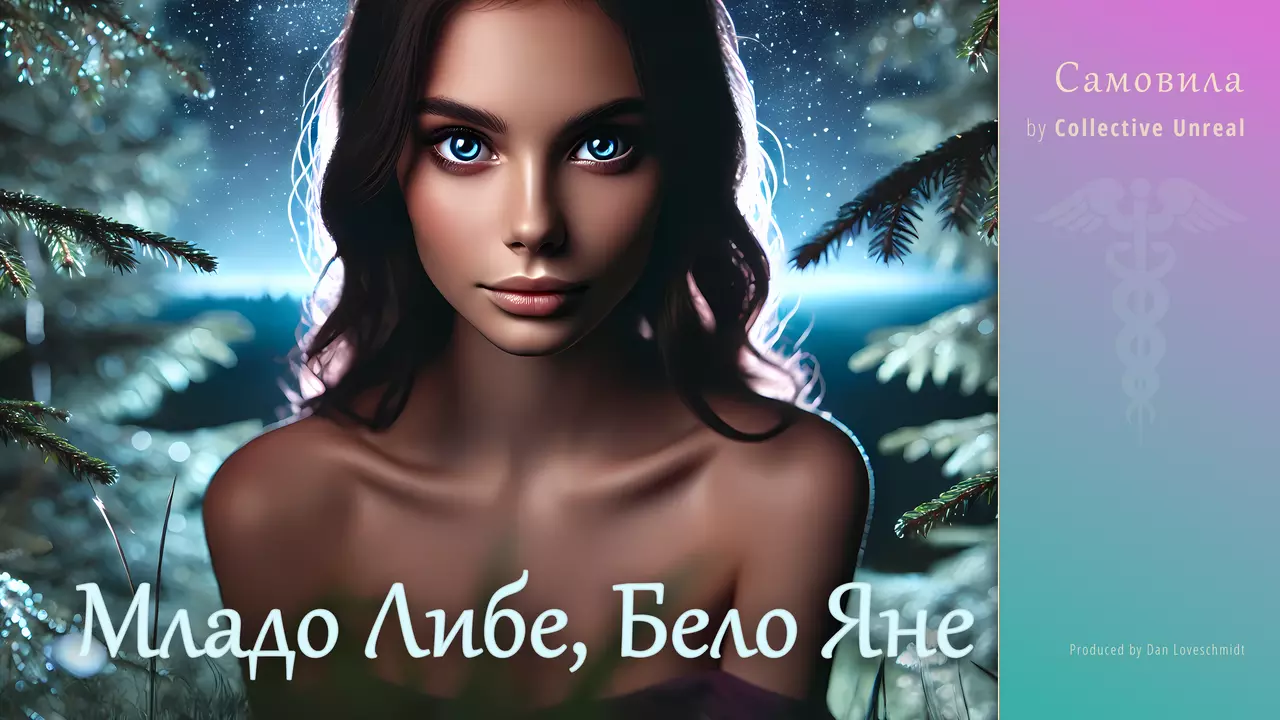

Maiden Fleet, Yane Fair
Samovilla
Lyrics: 1994, Dan Loveschmidt
Artistic English Translation ================= (Chorus 1) Maiden fleet Yane fair Eyes so dark Figure sweet Where you Yane yet again 'Neath the sky starlit With y'pitchers, where you flit? (Verse 1) Where be bound, pray you ask With m'pitchers thus I fare? Brazen pitchers to the wellspring bear Pour some crystal waters there (Chorus 2) Maiden fleet Yane fair Eyes starlit Slender neat Where's the wellspring in the dale Where's the way through wildwood shade To the sylvan samodiva's mere? (Verse 2) True y'say, good sir, 'tis there Where my wayward feet do stray Where m'heart is drawn away Where the sylvan samodivas sway (Chorus 3) Maiden fleet Yane fair Eyes replete Sapling knit Stop in time Haste thee home Samodivas, thirsty, drink thee whole (Outro) Yet heeds not Maiden fleet For the samodivas' haunt did seek In the lake a tear let fall Samodivas claimed their drink Original Bulgarian Lyrics ================= (Припев 1) Младо либе бело Яне óчи черни снага сладка Де си Яне пак под звездите светли с менците тръгнала? (Куплет 1) Де съм, вуйко, сáкаш с менците тръгнáла? Медни менци на чушмата нося бистра вóда да налея. (Припев 2) Младо либе бело Яне óчи звéзди снага тънка Дека е чушмата селска дека е пътека горска дето в извор самодивски води? (Куплет 2) Право думаш, вуйко, там е дето ме нозете водят дето ме сърце влече самодиви горски дето бродят. (Припев 3) Младо либе бело Яне óчи перли снага фиданка спри навреме бягай вкъщи самодиви жадни тебе ще изпият. (Финал) Но не слуша Яне младо либе самодивски дом подири В езеро сълза отрони самодиви я изпили.
This track was written in 1994 by Dan Loveschmidt at age 18, during a period of growing interest in Bulgarian pagan traditions—not through academic folklore, but as a living undercurrent still felt in language, stories, and terrain.
The name “Yana” (used here in its vocative form “Yane”) appears frequently in Bulgarian folk songs as the name for a young girl—often the one whose story unfolds at the edge of known paths. Not symbolic, not archetypal—just familiar, like a name passed through generations until it carries weight without needing explanation.
The lyrics don’t tell a story in the usual sense. They trace a movement—toward the forest, at night, with water jugs in hand. The samodivi appear at the end, but what happens is never spelled out. One tear falls. The samodivi drink. Whether they took her or relieved her isn’t resolved. The line holds both.
The text mixes everyday 90s Bulgarian with southern dialect forms—shifting stresses, local phrasing, informal construction. Nothing exoticized. Just how speech lives in mixed terrain.
The rhythm is in 4/4, grounded in Balkan dance but pulling lightly toward Latin flow. Pan-flute solos repeat vocal motifs; acoustic guitar and jazz-tinged percussion keep the tone light. But under the cheerful texture, something stays unresolved—held in the shape of the lyrics, not in what they say outright.